
PRODUCTS
Center
WEG Series – Low-Profile Ball Linear Guides
Features of the WEG Series Linear Guides
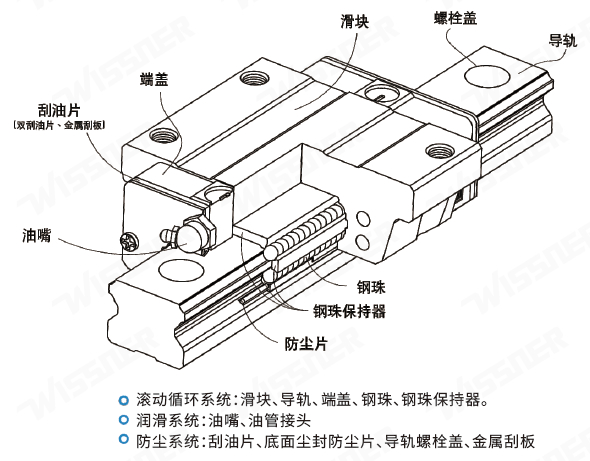
The WEG Series features a four-row ball bearing design to withstand loads, providing high rigidity and high load capacity. It also offers equal load distribution in all four directions and self-aligning capabilities, which compensate for mounting surface errors to meet high-precision requirements. Additionally, the reduced assembly height and shorter slide block length make it ideal for high-speed automated industrial machinery and compact equipment with space constraints.
The carriage is equipped with a ball retainer to prevent the balls from falling out. This design not only facilitates installation by the customer but also ensures that no balls fall out when the carriage is removed; furthermore, the components are interchangeable within the limits of precision.
WEG Body Structure
Slider Types
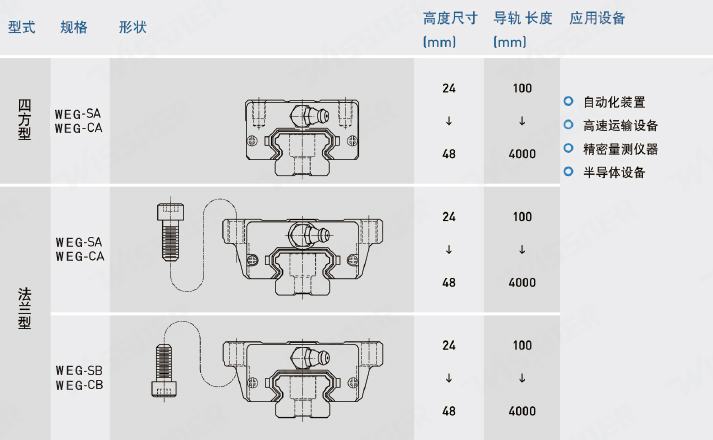
WISSNER offers two types of linear guides: flanged and square.
Accuracy Grades
The WEG series of linear guides is available in five accuracy grades: Standard, High, Precision, Ultra-Precision, and Ultra-High Precision. Customers can select the appropriate accuracy level based on their equipment’s requirements.
(1) Non-Interchangeable Linear Guide Accuracy
Assembly Accuracy Table (in mm)
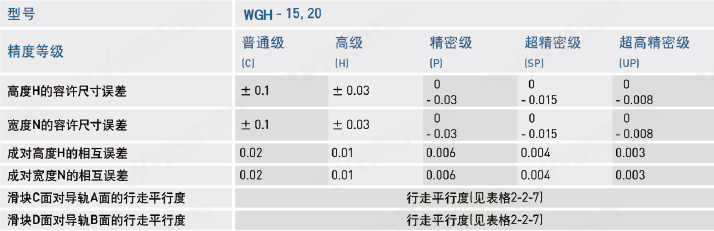
Assembly Accuracy Table (in mm)
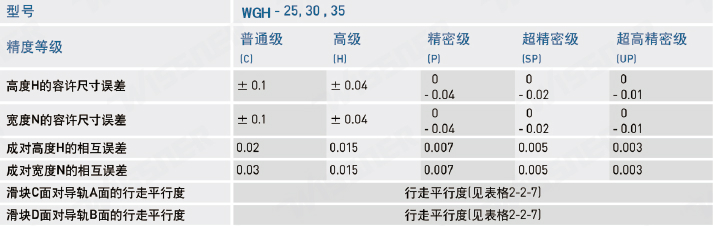
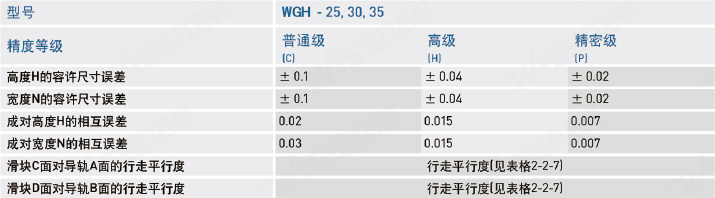
(2) Interchangeable Linear Guide Accuracy
Individual Part Accuracy Table (in mm)
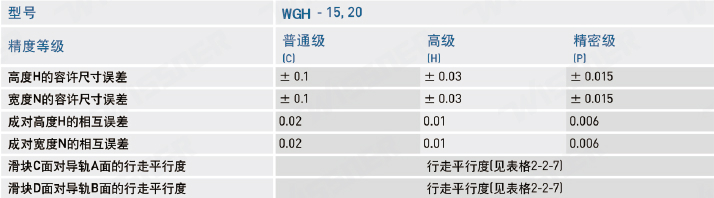
Precision Table for Individual Components (in mm)
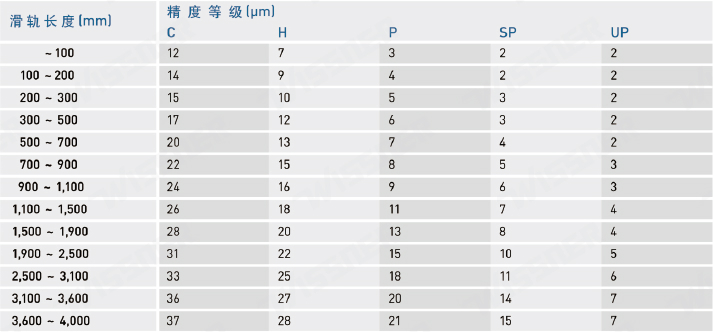
(3) Travel Parallelism Accuracy
Preload Force
(1) Definition of Preload
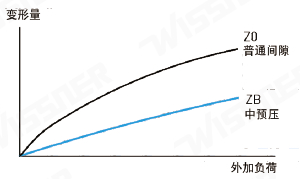
Preload is a load applied to the steel balls in advance; specifically, it involves increasing the diameter of the steel balls to create preload by utilizing the negative clearance between the balls and the raceway. This enhances the rigidity of the linear guide and eliminates backlash. As illustrated in the figure above, increasing the preload enhances the rigidity of the linear guide. However, for smaller sizes, it is recommended to select a preload level of “light preload” or lower to avoid reducing service life due to excessive preload.
(2) Preload Levels
The WEG series of linear guides offers three standard preload levels, allowing you to select the appropriate preload based on the application.
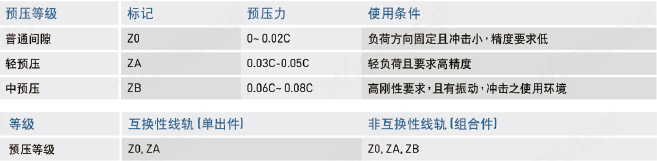
Note: In the preload value, “C” represents the dynamic rated load.
Lubrication Port Location
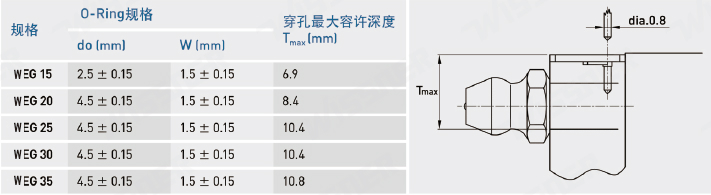
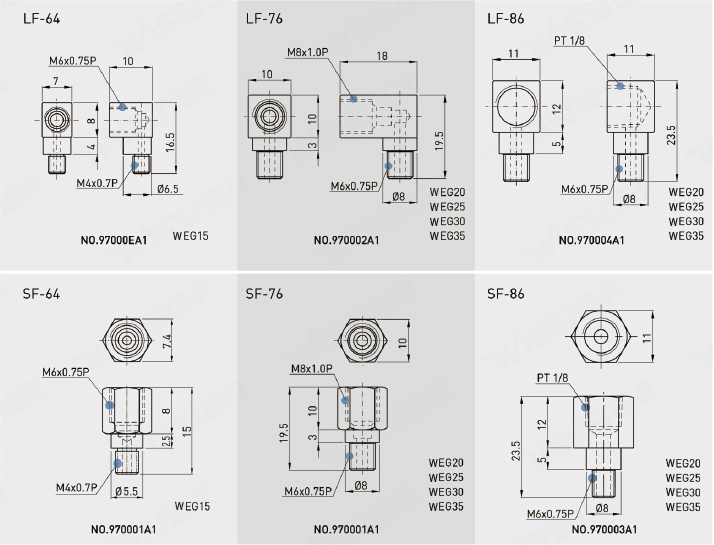
Depending on customer requirements, oil nipples can be installed at the front or rear end of the slide block for automatic lubrication. The WEG series specifically provides pre-drilled side oil port locations on the end cap for installing oil nipples (typically straight oil nipples), enabling lateral lubrication. It is recommended that the lateral lubrication port be positioned on the non-reference side; however, it may also be placed on the reference side if special requirements exist. Please contact us if you have the aforementioned lateral lubrication requirements. The WEG series also features a pre-drilled lubrication hole at the top of the end cap. If customers wish to supply lubricant from the top of the end cap, they must use a 0.8 mm diameter metal pin to preheat and pierce through the lubrication hole at the designated location, then install the sealing ring into the recess. Avoid using a drill bit to pierce the lubrication hole, as debris may contaminate the oil passage. For linear guides that use a piping system for automatic grease lubrication, select the appropriate oil pipe fitting based on the type of connecting pipe.
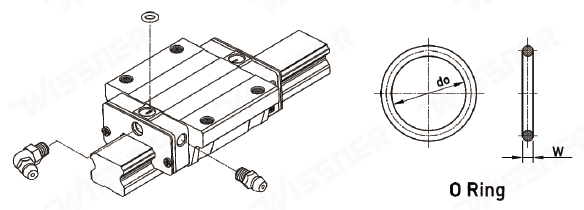
O-Ring Specifications and Maximum Permissible Piercing Depth
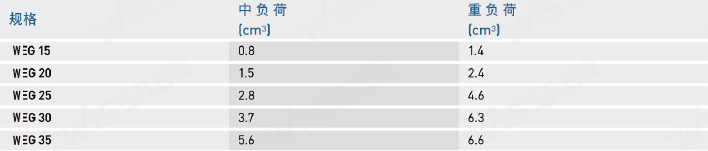
Grease Filling Volume per Slider
Lubrication Frequency
Check the grease every 100 km of operation, or every 3–6 months.
(2) Lubricating Oil
We recommend using lubricating oil with a viscosity of approximately 32–150 cSt for linear guides. Customers should inform us in advance if oil lubrication is required; otherwise, the linear guides will be shipped without grease pre-filled.
Oil Tube Fitting Types
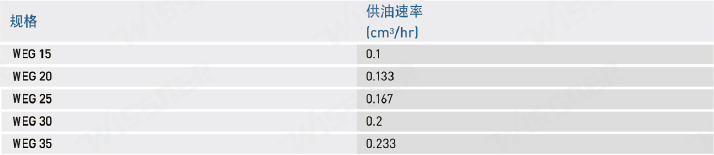
Oil Supply Rate
Dust Protection Options
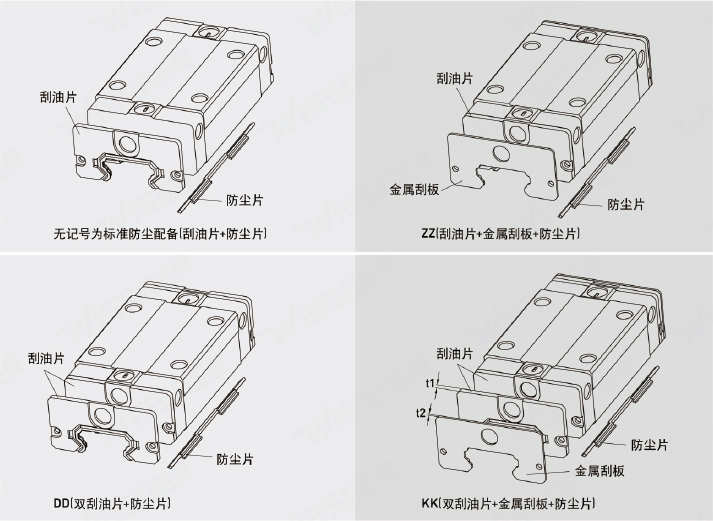
(1) Standard Dust Protection Code
If you require the following dust protection features, please add the corresponding code after the product model number.
(2) Dust Protection Features
● Oil Scraper and Bottom Dust Shield
Prevents metal chips or dust particles from entering the slide block, which could damage the ball race surface and reduce the service life of the linear guide.
● Double-Layer Oil Scraper
Doubles the chip-removal effect, ensuring foreign matter is completely kept out of the slide block even in heavy-duty machining environments.
Oil Scraper
● Metal Scraper
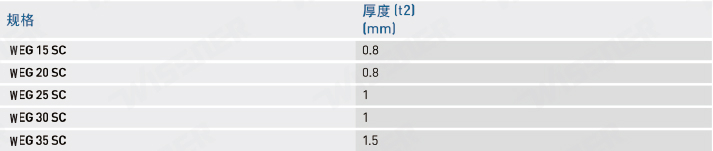
Isolates high-temperature metal chips or machining sparks and removes large-volume contaminants.
● Guide Rail Bolt Covers
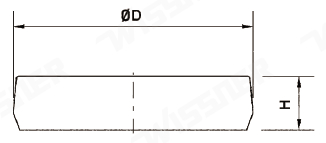
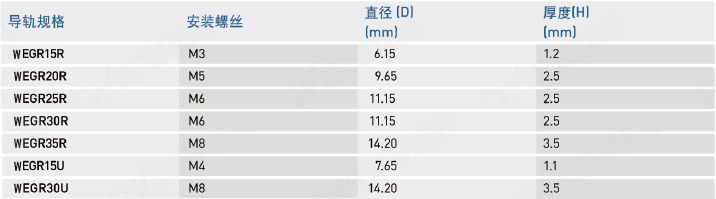
To prevent cutting dust or foreign objects from entering the slide block through the bolt holes and affecting accuracy, customers must drive the bolt caps into the bolt holes when installing the guide rails. Each guide rail is shipped with bolt caps.
Guide Rail Dust Covers
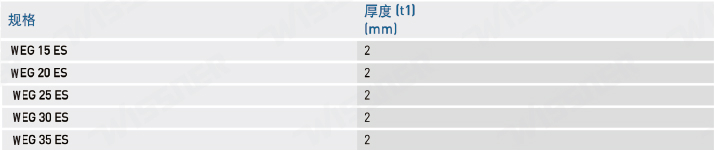
(3) Total Slider Length for Each Dust Cover Code
Total Slider Length (in mm)
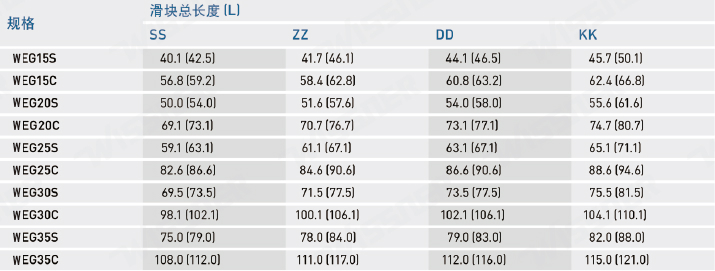
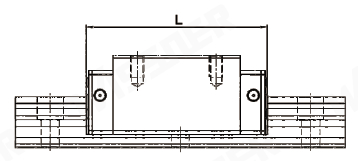
Note: The value in parentheses ( ) represents the maximum slider length, including screws, oil scraper lips, etc.
2-2-6 Friction Force
This resistance value represents the maximum resistance of a single oil scraper blade.
WEG Series Oil Scraper Resistance

Note: 4 kgf = 9.81 N
Mounting Surface Flatness Tolerance
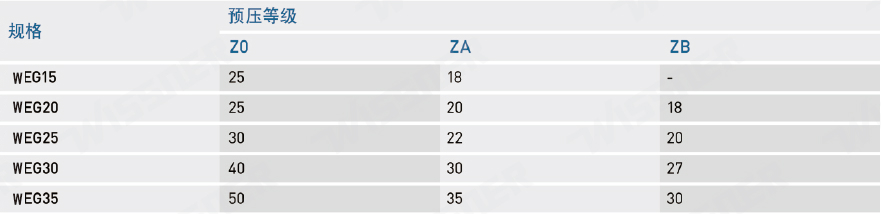
The WEG series features arc-type two-point contact linear guides; their self-aligning characteristics allow them to accommodate slight mounting surface irregularities without affecting the smoothness of linear motion. The table below lists the allowable flatness tolerances for the mounting surface:
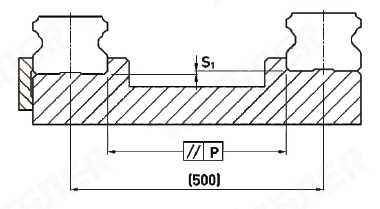
Permissible Flatness Error (P) (in μm)
Permissible Vertical Leveling Error (S1) (in μm)
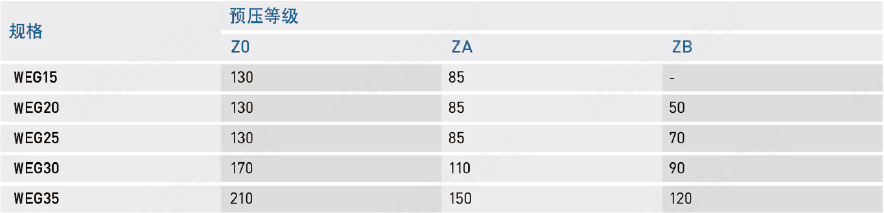
Note: Permissible values are proportional to the distance between shafts